Environment

Approach to biodiversity

Biodiversity Policy

In April 2014, Sanden enacted the "Biodiversity Policy" to further strengthen activities on biodiversity.

Intention

The Sanden Group recognizes the impact of business activities on the ecosystem and develops activities aiming for "Co-existence of Environment & Industry". And also, we will contribute to the realization of sustainable society.

Active
  1. Promote business activities where people and nature coexist
  2. Initiatively utilize ecosystem-conscious resources
  3. Active in cooperation with the community from a global perspective
  4. Develop environmental education activities to learn about nature's blessings
  5. Widely disseminate the results of activities to stakeholders

* Biodiversity includes plant protection and animal welfare.

Harmonious Coexistence with Communities and Nature Sanden Forest

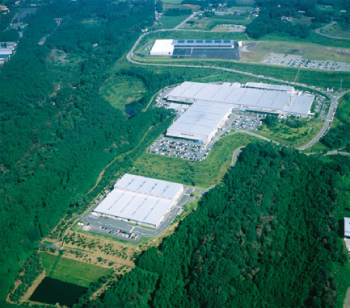
Aiming to achieve harmonious coexistence between nature and corporate activities, Sanden opened the Akagi site and the Sanden Forest surrounding it in 2002.


Currently, the Sanden Forest complex—constructed by employing a large-scale, close-to-nature construction method as the first attempt by the private sector—is serving as an environmental education venue for local educational institutions and as a model plant operating in harmony with nature as well as local communities, attracting a large number of visitors of all ages.

This page presents an introduction to some of the special features of the Sanden Forest.
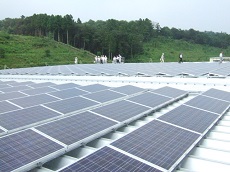
  • Solar Power Generating Array

    Sanden constructed a 1,440-panel solar power generating array able to generate up to 300kW of power on the roof of the distribution warehouse in the Sanden Forest.

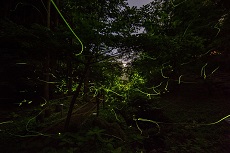
  • Streams where freshwater crabs live

    In the area with streams created from the drain channels of biotope ponds, there are a wide variety of water-side plants. It has now been confirmed that the area is home to many Japanese fireflies.
    Despite its being located next to a plant, many low and tall trees along streams prevent sunlight from coming in and create shade and its location in the river valley also prevents light from the plant and vehicles, providing a perfect habitat for fireflies.
    This area is also home to freshwater crabs, frogs, and aquatic insects.

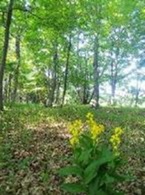
  • Acorn Plaza (Remaining forest area)

    This forest area has remained since before the construction of the Akagi Plant. In this maturing forest, there are trees that are over 70 years old. The wooded area consists mainly of broadleaf trees, such as Quercus acutissima and Quercus serrata. Due to our constant care, such as cutting bamboo grass and removing fallen leaves, many kinds of flowers bloom in spring, including orchids and many other endangered plant species. In the forest area that has remained since before the construction of the plant, Golden orchid can be seen in spring.

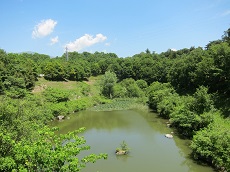
  • Biotope Ponds

    In areas near factory buildings, biotope ponds have been created to protect ecosystems. Around the regulating reservoirs for the plant, an ecotone has been created as a greenery zone leading from the reservoir to a marshy area, a grassy area and wooded area. Conventional regulating reservoirs, which have paved paths, are surrounded with a fence to reduce management costs and secure safety. In the design of the regulating reservoir here, however, priority was placed on the creation of a wildlife habitat. In the biotope ponds, many birds, including herons and kingfishers, can be seen.
    They also serve as a habitat for Japanese fireflies and a resting place for deer and antelope.

Environmental Report

Sanden’s Environmental Symbol: Sanden Forest – Akagi Plant

“Toward a Harmonious Coexistence of Environment and Industry”

In the 21st century, society expects companies to play significantly different roles than in the past. This includes actively participating in initiatives that build a sustainable society and fulfilling their responsibilities as members of that society.The Sanden Group proactively engages with the natural environment, aiming to “pass on our irreplaceable and beautiful Earth” by promoting coexistence, conservation, and restoration efforts.

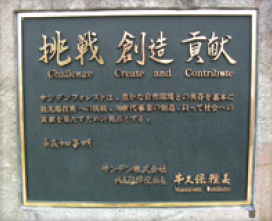
This concept was embodied in the “Sanden Forest-Akagi Plant,” which adopted the fundamental concept of “serving as a base to fulfill our ‘contribution’ to society by ‘challenging’ cutting-edge technologies and ‘creating’ next-generation businesses, based on coexistence with a rich natural environment.”

Sanden Forest has earned high praise both domestically and internationally since it started operation in 2002, as a result of implementing outstanding corporate social contribution activities, environmental conservation efforts such as ecosystem surveys through continuous environmental assessments, and environmental education programs.

The Sanden Group continues to take concrete actions that promote the harmonious coexistence of environment and industry.


pagetop